

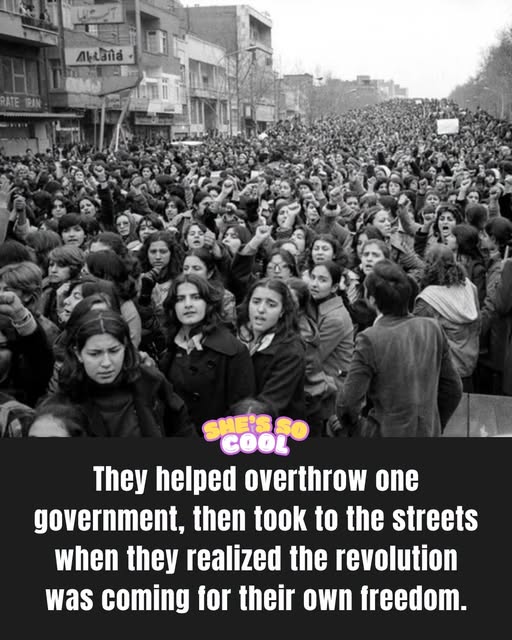
On March 8, 1979, thousands of Iranian women poured into the streets of Tehran. Many had helped overthrow the Shah only weeks earlier.
Now they were protesting the revolution they had helped make.
The previous day, Ayatollah Ruhollah Khomeini had declared that women working in government offices should observe Islamic dress. It came amid other alarming changes. Iran’s Family Protection Law, which had expanded women’s rights in marriage and divorce, had already been declared contrary to Islamic law.
The timing was extraordinary.
March 8 was International Women’s Day. Women who had marched against the Shah returned to the streets, this time confronting the direction of the new Islamic government.
Students came. Nurses came. Lawyers, teachers and office workers came. Some wore headscarves. Others did not.
Photographer Hengameh Golestan walked among them with her camera.
At first, she remembered, the atmosphere was almost joyful. The revolution had just taught an entire generation that taking to the streets could change history. Some women apparently believed they could do it again.
Then came the hostility.
Women were insulted, harassed and attacked by groups of men. State-controlled media dismissed the demonstrations, and protesters were smeared as immoral women and supporters of the old regime.
Still, they kept marching for days.
Golestan photographed them packed into Tehran’s streets, some raising fists, others carrying handwritten signs. She later said newspapers did not want to publish her photographs because acknowledging the size of the demonstrations was politically uncomfortable.
The women did not stop what was coming.
Compulsory covering was imposed gradually, and by the early 1980s the state was enforcing Islamic dress in public.
What makes those photographs so haunting is that the women could not yet know what they were witnessing.
They were standing near the beginning of a fight Iranian women would still be waging more than four decades later.